Henry Schenk House
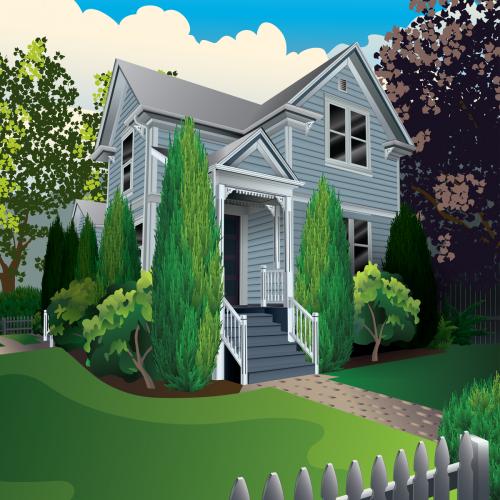
135 NE Irvine Street | Built 1902
Rowland’s addition, platted in 1865, saw significant development after the Western Oregon Railroad
arrived in 1879. The Henry Schenk House stands as a well-kept example of a simple Victorian home in
Rowland’s Addition. This modest yet comfortable residence reflects the kind of housing built for
working and middle-class families during this period.
The house features cross gables on all four sides and several inviting porches. A charming picket fence
surrounds a spacious yard with beautiful landscaping typical of generous corner lots in the Victorian
era. These elements give the home a great sense of charm and help preserve the look and feel of
McMinnville at the turn of the 20th century.
German immigrant Henry Schenk met and married Kate Bertram in Ohio before the couple emigrated to
Oregon in 1878. Kate’s father, Henry Bertram Sr., also from Germany, followed them in 1883 with his
wife Annamaria and four sons, including Henry Bertram Jr. The family settled in Dayton, where the two
Henrys—father-in-law and son-in-law—gained a reputation for building lovely Queen Anne-style
homes. They collaborated on many projects, including Pioneer Hall at Linfield University in 1883 and the
Henry Bertram Sr. House in Dayton in 1892, both listed in the National Register of Historic Places. In
1902 they built the Henry Schenk House at the corner of 5th and I streets (now NE Irvine and Second).
Minnie Schenk, daughter of Henry and Kate, lived in the home for many years after her parents died.
This restored Victorian home represents the everyday lives and contributions of McMinnville emigrants
who helped shape the town during its transition from pioneer settlement to thriving community. It is
also a reminder of the simple elegance and neighborhood character that still define many of
McMinnville’s historic residential streets.

Contact Information
 Community Development Director:
Heather Richards
Planning Phone: 503-434-7311
Planning Email
Community Development Department
Community Development Center
231 NE Fifth Street
McMinnville, OR 97128
Hours of Operation
Monday- Friday: 7:30am - 5:30pm
Office Lobby Hours (Walk-In Availability)
Monday- Thursday: 7:30am - 5:30pm
Fridays: Closed
Appointments are available with CDC staff.
Connect With Us